
Custom USB Flash Drives — Built to Your Specification
WINTEL makes custom USB flash drives for OEM and ODM programmes: you specify the body, shape, capacity, interface, branding and packaging, and we build the flash inside it on our own floor in Shenzhen. OEM means the drive is built to your drawing with your brand on it; ODM means you take one of our existing bodies and put your brand on it. Standard bodies carry a 50-piece minimum; a bespoke mould and custom packaging carry their own minimums. The published range is US$2–6 per unit from 500 pieces, and you approve a physical sample before bulk production starts.
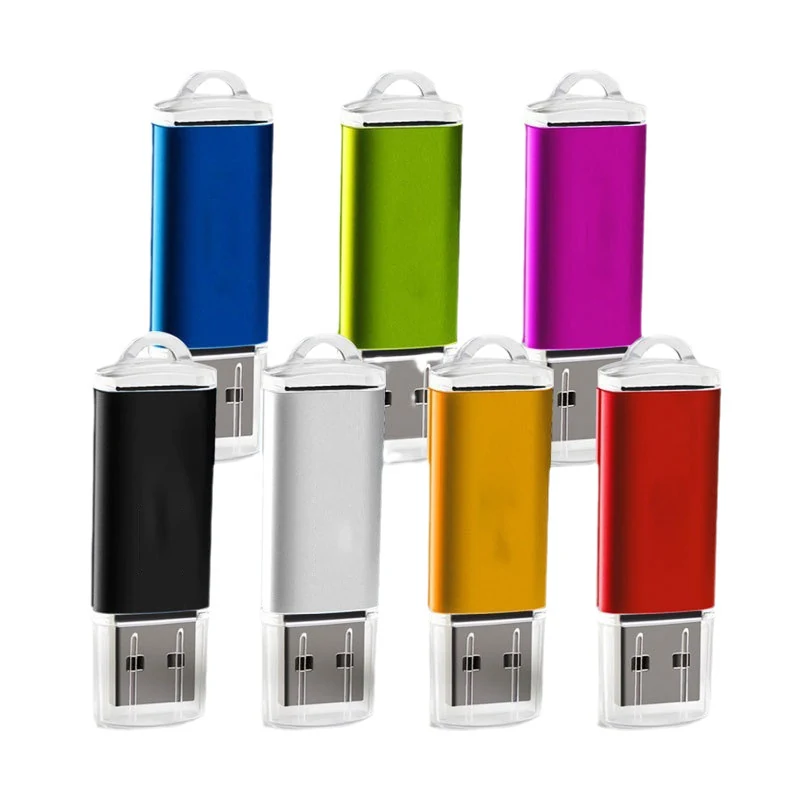
A custom USB flash drive is a standard flash module built into a body, finish and mark that belong to one buyer rather than to a retail line. WINTEL makes it from 128MB to 128GB on USB 2.0 or 3.0 in metal, PVC or wood, and can tool a shape that exists nowhere else.
Key facts
- ProductCustom USB flash drive
- Price rangeUS$2–6 per unit at 500 pieces and above — published, not a quotation
- Capacity128MB – 128GB
- InterfaceUSB 2.0 / USB 3.0
- BodyMetal / PVC / wood — or a bespoke mould to your design
- BrandingSilk-screen / full-colour print / laser engraving
- Custom mouldAvailable — artwork or 3D design to start
- SampleAvailable — approved before bulk production
- TestingCapacity verification + read/write check before packing
- MOQ50 pieces on standard bodies; a bespoke mould and custom packaging carry their own minimums
- Lead timeConfirmed against specification and target date
What you can customise
| Variable | Your options |
|---|---|
| Body material | Metal, PVC or wood as standard; bespoke mould for your own shape |
| Shape | Standard swivel, stick, card, wristlet — or a mould made from your artwork or 3D design |
| Capacity | 128MB to 128GB, specified per order |
| Interface | USB 2.0 or USB 3.0, matched to the host device |
| Read / write speed | Specified per project against your use case |
| Silicon & controller | SanDisk, Toshiba, Micron, SK Hynix, Intel, Samsung at A+ grade; controllers from Alcor, ITE, Xinbang, Micov |
| Branding | Silk-screen, full-colour print, laser engraving — method matched to material |
| Packaging | Bulk, retail or presentation box, quoted together with the drive |
How far you take that customisation falls into three depths. The first is a stock body with your mark on it. The second carries your brand through the packaging. The third ships in a state a retailer can shelve without repacking.
| Depth | What is included | Starting point |
|---|---|---|
| Branded stock body | Existing mould and your logo — silk-screen, colour print or laser engraving | 50 pieces per design |
| Private label | Your brand on the product and the packaging, plus inserts and labels; no WINTEL mark on the unit | Quoted per project — send the pack you have in mind |
| Retail-ready | Barcode, FNSKU or retailer label, retail packaging and a printed insert, packed to your planogram | Quoted per project — barcode and artwork come from you |
How a custom order runs
- 01 · Send your requirementProduct type, capacity, quantity, application, branding, packaging and target date. Artwork or a design file if you have one.
- 02 · Specification confirmed in writingIncluding silicon source, grade and controller solution — before it is priced.
- 03 · QuotationProduct, branding, tooling (if any) and packaging priced together, with the validity period stated.
- 04 · Sample approvalYou approve a physical sample — the only reliable check for colour, print quality and body feel.
- 05 · Bulk production & testingCapacity and read/write verification on the production batch before packing.
- 06 · ShipmentPacked and exported against your Incoterms, with the test method published so you can verify independently.
This page is the product side of the order. If what you need first is the factory side — lines, test coverage, what "manufacturer" means when the seller is a trading company — read the USB flash drive manufacturer page instead.
Which body, and what it changes about the order
The body is the part of a custom drive a buyer actually holds, and it is also the part that decides how the order behaves — whether tooling is needed, which branding method survives, and how long the run takes. Work down this list before choosing a shape:
| Body | What it suits | What it changes about the order |
|---|---|---|
| Metal | Corporate gifts, conference stock, anything handled daily for years | Laser engraving is the natural mark and does not wear off; stock bodies need no tooling, so the run starts sooner |
| Wood | Gift and retail presentation where the material is part of the message | Grain and tone differ from unit to unit, so a colour approval is an approval of a range rather than of one shade |
| Wheat-straw composite | Briefs that carry a sustainability clause — EU tenders, ESG reporting, retail ranges where the material is the point | A plant-fibre composite instead of virgin plastic. Colour is muted compared with ABS, so a bright brand colour cannot be matched exactly — approve a range, not a swatch |
| PVC | Shaped or soft-touch bodies, 2D and 3D castings | Needs a mould, and the mould limits how fine the detail can go — thin sections and hairlines are the first things lost |
| Stock plastic body | Volume promotional work where unit cost leads | Cheapest route to a printed drive: no tooling, print method chosen to suit the surface |
| Bespoke mould | A mascot, a product replica, a shape that exists nowhere else | Tooling is a separate cost and a separate lead time, and the mould has to be cut before a sample can exist |
| Card or slim format | Print-led designs — a business card that carries data | Largest flat print area of any body, at the cost of a thinner shell |
| Module or semi-finished board | Buyers with their own housing or their own assembly line | No body and no print — you take the flash and the controller, and the branding happens on your side |
Body-by-body detail lives on metal, wood, PVC, custom shape, custom moulded and UDP module pages. If the choice is between a module and a finished drive, TF card against UDP module sets out the trade.
Beyond the bodies above, three variants come up often enough to name.
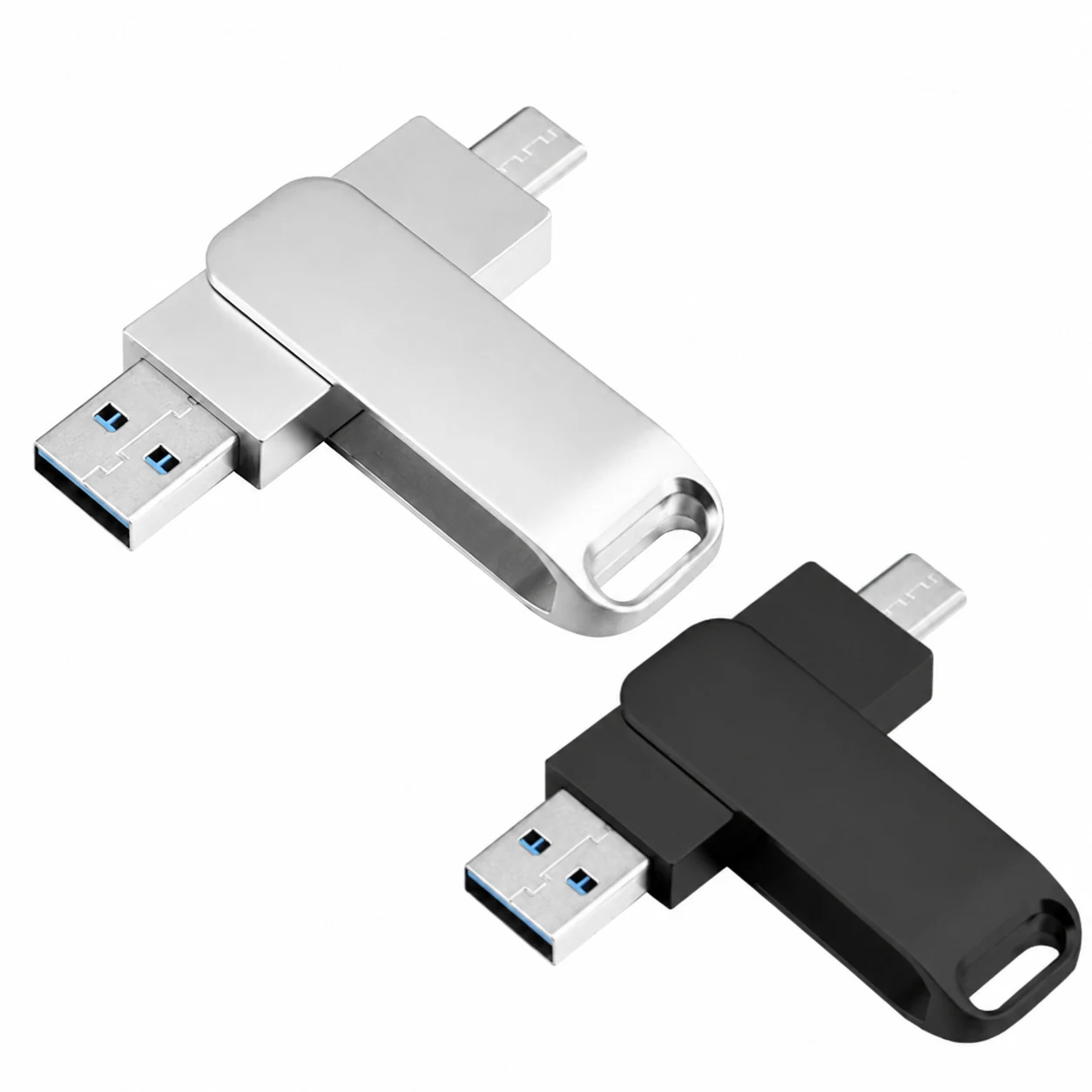
Dual-interface bodies put a USB-A and a USB-C connector on the same drive, for buyers whose users are split between laptops and phones — one part number instead of two, at the cost of a slightly longer body and one more joint to specify.
Mini or short bodies are for installs where the drive stays plugged in, such as a car head unit, and has to sit flush rather than stand out and get knocked.
Patterned shells — porcelain, cloisonné-style and other heritage finishes — turn up in gift programmes where the drive is meant to look imported rather than corporate, and they are the ones where artwork approval matters most, because the pattern is fired or inlaid rather than printed on top.
Function, not just finish
Most custom orders decide the outside of the drive. A smaller number decide what it does when it is plugged in — and that is usually the reason the order exists at all: a tender document that must not be edited, a price list that must not be forwarded, a training video that has to open without anyone explaining it first. Both kinds are built on the same line.
| Requirement | What it means on the drive | What to check before ordering |
|---|---|---|
| Preloaded content | Files written before final test and pack — software, manuals, video, catalogues, price lists | Total size against usable capacity, not nominal; and whether the recipient's device can open each format without extra software |
| Read-only | The recipient can open the files but cannot edit or delete them | Whether the host honours it — Windows and macOS do; some Linux mounts can ignore the flag |
| Copy-protected | The content cannot be copied off the drive onto another device | Which host platforms must be covered. This is per-platform work, not one switch |
| Password-gated | The content opens only with a password or key you control | Who holds the recovery path when a user leaves, and what happens to the drive then |
| Auto-launch page | Plugging the drive in opens a landing page or a menu screen | Autorun is disabled by default on current Windows and does not exist on macOS. Treat it as a bonus, never as the delivery mechanism |
| Serialised units | Each drive carries its own identifier, for asset tracking or licence binding | Whether the IDs must already exist in your system before the batch ships |
Two limits worth stating before you specify any of this. Not every combination behaves the same on every host: a drive that is correct on Windows can fail silently on a locked-down corporate laptop, so tell us the platform mix, not just the requirement. And a functional drive is not a security product — it stops casual copying, not a determined one. If the content has to survive someone who really wants it, that is a different conversation.
What is verified before it ships
“Capacity verification and read/write check” is on the key facts above, so it is worth saying exactly what those words cover. They are not the same claim as “100% tested”.
- Capacity is proved by writing, not by reading a file list. A full write-and-read-back fills the whole advertised capacity and compares what comes back. A host that shows the expected drive letter proves nothing, because a faked controller answers that question from firmware.
- Speed is measured against your workload. A sequential figure and a small-block random figure are different measurements, and a drive that looks fast on a large file can stall on the small writes a device actually generates.
- Sampling follows the plan agreed in the order. Where a contract is silent, the usual default for lot-by-lot inspection is ISO 2859-1 General Inspection Level II. Whichever plan is used, the report should name the sample size, the tool, and the temperature it ran at.
The reference tool for a write-and-read-back is f3 on macOS and Linux, H2testw on Windows. Why a reader check cannot substitute for it is set out in write-and-read-back against a reader check, and the fake-capacity case in how to prove a drive is faked.
What buyers order custom USB drives for
The specification rarely starts with a body material. It starts with an occasion, and the occasion decides almost everything else. These are the eight we build most often, each with the constraint that actually governs the order:
- Car dealership launch events and showroom handovers — where a date is printed on the packaging and a late delivery is worthless.
- Brewery and taproom branded drives — where the body has to survive a wet room and the label colour has to match a printed can.
- School admissions packs and graduation keepsakes — a fixed term date, and content that is decided later than anyone expects.
- Gym and fitness-chain member onboarding — where the body fails before the flash does, because a soft PVC drive does not survive a kit bag.
- Real estate open-house packs — where the drive outlives the listing, so the property details belong on a reprintable insert.
- Bank and insurer client gifting — where the gifting register is the real project, and cheap-looking media is the compliance problem.
- White-label drives sold under the buyer’s own brand — our name off the product, our name still on the test record.
- Bulk orders from fifty thousand units — where the question stops being “can you make it” and becomes “will the sixth batch match the first”.
Not sure which shell fits? All twelve custom USB drive types compared, and the shipping destination matters too — what changes between Europe, the Gulf, Africa and Latin America.
OEM or ODM: which one you are actually ordering
The two words get used interchangeably in enquiries and they are not the same order. The difference decides who owns the tooling, who carries the model number, and how long the first batch takes.
| Model | Who owns the body design | Branding | Tooling | Typical first order |
|---|---|---|---|---|
| OEM | You. The body is built to your drawing or 3D file. | Your brand is the product; ours does not appear. | A new mould is opened for you, and the tooling is quoted as its own line. | Longer — mould lead time sits in front of production. |
| ODM | Us. You choose from the bodies we already tool. | Your logo on our body — print or laser engraving. | None. The mould already exists, so the run starts sooner. | Shorter — 50 pieces on a standard body. |
| Private label | Us, under your brand throughout. | Your brand on the product, the packaging and the paperwork. | None, unless you also want a bespoke body. | Same as ODM; see private-label memory cards for the packaging side. |
If you are still deciding, the honest test is simple: whoever owns the 3D file owns the product. If the file is yours, order OEM and ask for the tooling cost separately — and ask who stores the mould between runs, because that answer decides what happens when you change supplier. See how tooling cost is shared across orders.
Price ladder: what actually changes between 50 and 50,000 pieces
Buyers ask for a unit price at 50 pieces and are surprised it is not 50,000 divided by 50,000. The price does not fall linearly because two of the four cost lines are fixed: the set-up (artwork, plate, mould) and the packing. What falls with volume is the per-unit share of those, not the flash inside.
| Quantity | Published price | What is included | What changes at this band |
|---|---|---|---|
| 50 – 499 | Quoted per project | Sample approval, set-up, print, packing | Set-up dominates the unit price. We do not publish a figure here because it would not be comparable with a volume price. |
| 500 – 4,999 | US$2 – 6 / unit | Body, flash, print or engraving, bulk or retail pack | The published range applies from here. Position inside the range is set by body material and capacity, not by quantity. |
| 5,000 – 49,999 | Lower end of the range | Same scope, scheduled runs | Printing and packing cost per unit falls; the flash cost does not. Ask for the band to be held for a fixed period. |
| 50,000 + | Programme pricing | Call-off releases against a frame agreement | Priced against NAND market rather than held flat — lock the band and the review cadence, not a single number. |
Two cost lines are worth separating at enquiry stage, because suppliers quote them differently: tooling (one-off) and programme set-up (one-off per programme, not per order).
The 13 bodies we already tool — and what each one changes
These are not catalogue renders. Each has its own specification page with dimensions, weight, capacity range, branding method and the order notes that catch buyers out — including when not to choose it.
| Body | Form | Material | Size | Specification |
|---|---|---|---|---|
| Metal card body 51 × 21 | Card | Metal (zinc alloy body) | 51 × 21 × 9 mm | Full specification |
| Metal bar 33 / 39 mm | Bar | Anodised aluminium | 33 × 12 × 5 mm (short) / 39 × 12 × 5 mm (long) / 48 × 12 × 5 mm (extra-long) | Full specification |
| Swivel 67 × 19.5 | Swivel | Metal (zinc alloy) | 67.5 × 19.5 × 10.7 mm | Full specification |
| Plastic card body 51 × 21 | Card | ABS plastic | 51 × 21 × 9 mm | Full specification |
| Mini swivel 45 × 15 | Swivel | Metal (zinc alloy) | 45 × 15 × 8 mm | Full specification |
| Mini 30 × 12.5 | Mini | Metal (zinc alloy) | 30 × 12.5 × 5 mm (24 × 12 × 4 mm version for tighter housings) | Full specification |
| Paw-shape 42 × 12 | Shaped | Anodised aluminium | 42 × 12 × 5 mm | Full specification |
| Robot-shape 65 × 20 | Shaped | Moulded plastic (ABS) | 65 × 20 × 10 mm | Full specification |
| USB-C swivel 68 × 16 | Swivel | Metal (zinc alloy) | 68 × 16 × 11 mm | Full specification |
| Dual-connector OTG 70 × 20 | Swivel | Metal (zinc alloy) | 70 × 20 × 5 mm | Full specification |
| Swivel 57 × 20 | Swivel | Metal (zinc alloy) | 57 × 20 × 10 mm | Full specification |
| Wheat-straw bar | Bar | Wheat-straw-filled polymer (bio-based filler) | 85 × 45 × 18 mm packed; moulded bar, 8 g | Full specification |
| Folding dual 32 × 15 | Folding dual | Metal (zinc alloy body, plated finish) | 32.5 × 15.2 mm, 20 g | Full specification |
Comparing shapes first? All custom USB drive types compared. Need a shape that is not here? That is an OEM order, and it starts with a drawing rather than a quotation.
The schedule, stage by stage — and which stage is yours
A single lead-time figure is useless because it hides the one stage you can actually shorten. Split it and the calendar becomes something you can plan against.
| Stage | Typical duration | Who controls it | How it moves |
|---|---|---|---|
| Artwork and approval | 1–7 days | You | Proof rounds and sign-off. Approving from a photograph on a monitor is what turns this into two rounds. |
| Sample | A few working days, plus courier | Shared | Shortest on a stock body in a stock colour. A new mould or a matched Pantone adds a round trip. |
| Production | 3–15 working days | Factory | 1–3 days on stock bodies in standard capacities; engraving and box packing each add a step. |
| Test and pack | 1–5 working days | Factory | Not compressible — this is where an under-capacity unit is caught, and it runs per piece. |
| Transit and clearance | 3–20 days | Neither, entirely | Freight mode and destination. Plan the buffer rather than argue about it afterwards. |
The full arithmetic, including why a pre-production run that assembles in three days can still take weeks, is in why lead time moves and what you control.
Where a custom USB drive order actually goes wrong
Seven failures come up again and again. Each one is cheaper to avoid than to fix, and six of the seven are decided before production starts.
| The trap | Why it happens | What to do instead |
|---|---|---|
| Artwork approved from a screen | A brand colour looks right on a monitor and wrong on anodised metal or moulded PVC. Nobody discovers it until the first carton is opened. | Approve a physical proof in the actual material. A few days here is cheaper than a reprint of the whole run. |
| Logo method chosen after the body | Laser engraving needs a material that reacts; four-colour print needs a flat print area that a curved swivel body does not have. | Choose body and marking method together. The body decides what the marking can be, not the other way round. |
| Capacity quoted without a grade | "64GB" is a capacity, not a specification. Grade decides retention and failure rate, and it is invisible in the quote. | Ask for the silicon grade and source in writing, and for the test criterion. Both are on our quotations by default. |
| Visible capacity, not real capacity | A 32GB drive reports about 29.8GB to the operating system. Buyers who did not expect it treat normal arithmetic as a shortfall. | Decide up front how you will answer that question — on the listing, the packaging or the FAQ — rather than after the first complaint. |
| Preloading treated as packing | Copying files and verifying them is a production step with its own test, not something added at the packing bench. | State the content, the verification method and who owns rights clearance at the quotation stage. |
| Variable data assumed to be free | A different serial, name or number on every unit changes how the run is marked and checked, and it changes the reject rate. | Say it is variable data when you ask for the quotation, not when you send the spreadsheet. |
| Packaging discovered on the second invoice | A gift box, a printed sleeve or a hand-filled insert are separate operations, and they are not implied by the unit price. | Ask for the packing line to be itemised. Anything not on the quotation is a change order later. |
Most of these are documentation problems rather than manufacturing problems — the custom USB RFQ checklist covers what to put in the enquiry so none of them reaches the production floor.
Request a custom USB flash drive quotation
Capacity, quantity, application, branding and target date is enough to start. We reply to business enquiries within 1 business day.
Or email cathy@go-wintel.com — answered by Cathy, sales engineer.
Frequently asked questions
What can be customised on a USB flash drive?
Body material, shape (including a bespoke mould), capacity, interface version, read/write speed, branding method, packaging and accessories. Capacity, interface and silicon source are engineering decisions, not just cosmetic ones — they are fixed in writing on the quotation.
Can I use my own artwork?
Yes. Tell us the file format you have and we will confirm what we need to produce the proof. Vector artwork gives the cleanest result for logos; artwork handling is confirmed per project once the body material and print method are known.
Do I need a custom mould, or is a standard body enough?
If your requirement is logo-only, a standard body with printing or engraving is the faster and cheaper route. A custom mould makes sense when the shape itself is part of the brand — see our custom molded USB drives page for how tooling works.
What is the MOQ for a custom USB flash drive?
50 pieces. That is the floor on a standard body, and it holds whether the branding is silk-screen, full-colour print or laser engraving. Two items are quoted separately because they carry their own minimums: a bespoke mould, if the shape does not exist yet, and custom retail packaging, which is made by a different process. Fifty is also the point below which the fixed setup dominates the unit price, which is why the floor is not negotiable downwards.
How long does custom USB production take?
It depends on the body, the branding method and whether a new mould is needed. Send your specification and deadline and we will confirm a schedule in the quotation rather than quoting a generic lead time.
How do I know the drives I receive match what I approved?
The specification is fixed in writing before pricing, a physical sample is approved before bulk production, and the batch is capacity- and read/write-verified before packing. Our test method is published so you can verify any unit independently.