
How an industrial HMI card batch is released: in-enclosure temperature sweep, brown-out testing, write-abort at random power loss, and a written lock on controller and die.
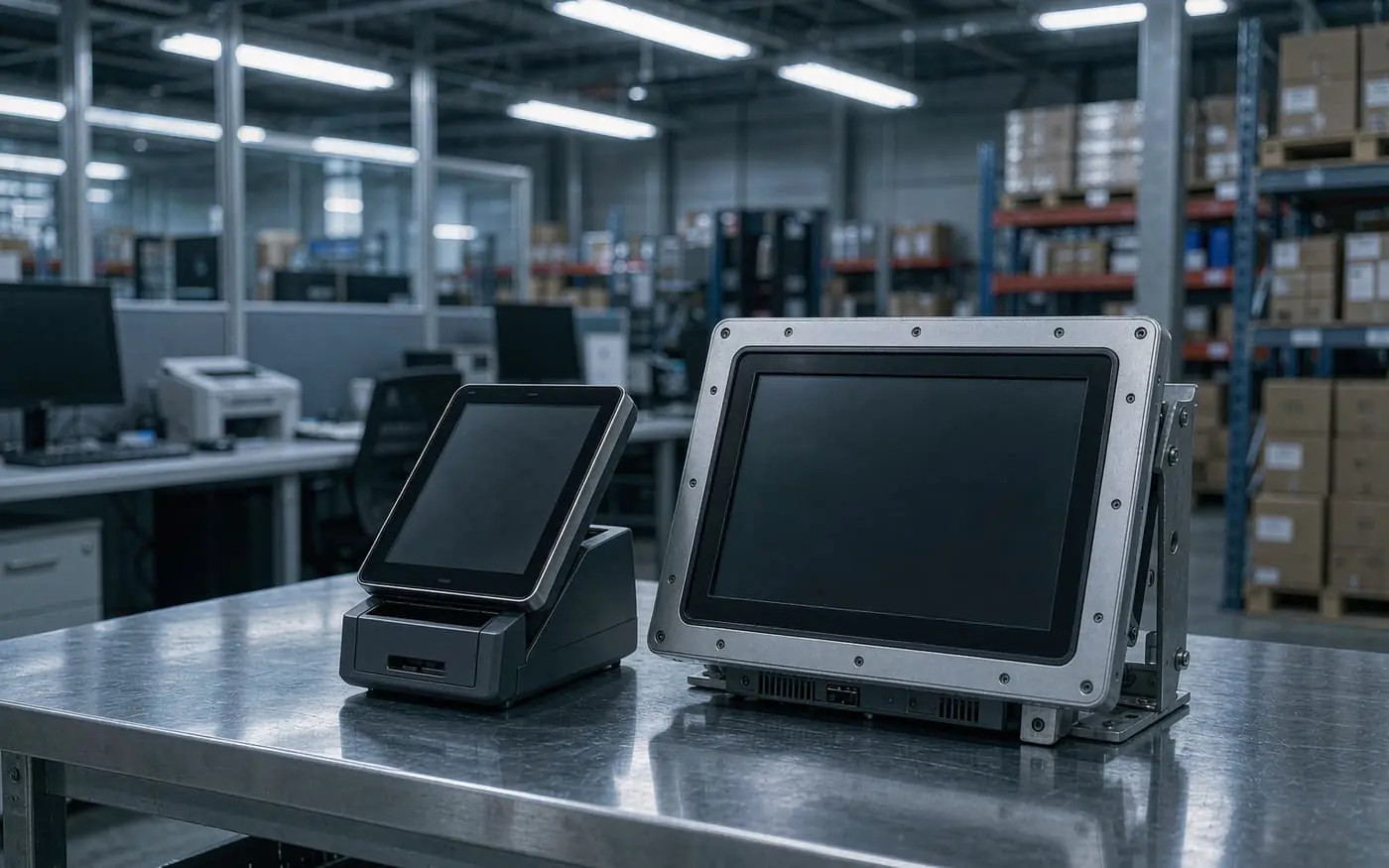
An HMI card has an easy life on paper. A few megabytes of recipes a day, the occasional log export, a firmware update twice a year. Then the panel goes into a cabinet next to a drive, the cabinet sits at 58 °C all summer, and the plant cuts power at the wall every Friday night because that is how the shift ends. That is the environment the card is actually specified for.
The short answer
Three decisions carry almost all of the risk, and none of them is the speed class:
- Capacity at or below 32 GB unless you have measured the log volume. Below 32 GB you stay in SDHC, which virtually every embedded host mounts with FAT32 and no extra driver work.
- Power-fail behaviour, in writing. A card that loses the last write on a power cut is acceptable. A card that loses the file system is a service call to a plant you may have to fly to.
- A locked controller and NAND, not a locked model name. The retail name on the label is the least stable thing about a flash product.
The question that separates a real industrial supplier from a catalogue: ask what happens to the card if power is removed during a write. If the answer is a number of test cycles and a description of what survives, you are talking to someone who has tested it.
The four gates
We release industrial batches against these, in this order, on the production lot.
| Gate | What is checked | Pass criterion | What it catches |
|---|---|---|---|
| 1. Temperature sweep | Write and read in the panel’s actual enclosure, from cold-store to the top of the cabinet’s summer range | No enumeration failure, no write error across the range | Cards that work at 25 °C on a desk and drop out at 60 °C |
| 2. Brown-out | Supply pulled to the low end of the panel’s tolerance and back, repeatedly | Card re-enumerates and mounts; last log entry intact or cleanly truncated | Marginal power designs that only fail on a long cable run |
| 3. Write-abort | Power removed at random points inside a write, hundreds of times | File system mounts without repair; no corrupted directory | Controllers with no power-fail strategy, which is most consumer cards |
| 4. Supply lock | Ten units against the approved sample: controller, NAND marking, capacity, firmware behaviour | Identical to the approved sample | A BOM that quietly changed between the third and fourth shipment |
Gate 3 is the one that costs money when it fails, and there is no way to test it short of actually cutting power. A card that survives 500 abrupt cuts tells you more than any benchmark.
What to write into the specification
| Decision | The trap if you leave it vague | What goes on the purchase order |
|---|---|---|
| Capacity and file system | 64 GB card specified, host only mounts FAT32, panel shows “card error” at the customer site | Capacity, file system as shipped, cluster size |
| Speed class | Paying for V30 on a panel that writes 2 MB per event and uses a 12 MB/s bus | The class the host requires, no higher |
| Endurance and power-fail | “Industrial grade” with nothing behind it | Endurance basis and power-loss behaviour, in writing |
| Controller and NAND | Same model name, different controller, different behaviour on a Friday power cut | Controller family, NAND type and grade; substitution needs new sample approval |
| Marking | Every card identical, so a three-year-old card cannot be told from a new one | Part number and lot code on the label |
| Test scope | Sample passes a format and a file copy, then fails in the cabinet | Temperature sweep, brown-out, power-abort, and the panel’s own firmware in the loop |
The test scope row is where cheap and honest diverge. Anyone can format a card and copy a file.
Five ways an HMI card actually fails
Heat inside the enclosure. A sealed cabinet with a drive and a power supply is warmer than the room by 15–25 °C. Cards throttle, then drop off the bus. This is not visible on a bench and rarely appears in the first month.
Friday-night power cuts. The plant isolates the panel at the wall. If the controller has no power-fail handling, the directory entry and the data it points at can disagree, and the panel boots to a card it cannot mount.
Brown-out on a long supply run. Voltage sags below the card’s threshold for a few milliseconds during a contactor switch. The card resets mid-write. This one is insidious because the panel otherwise looks fine.
BOM drift. The card you approved in March was built with one controller. The card shipped in September is the same product name and a different internal design. Nothing on the label says so.
Wrong capacity for the log volume. A 4 GB card in a panel that writes a 2 MB log every minute fills in about six weeks. When it fills, behaviour depends entirely on firmware that was never designed for a full card.
When a card is the wrong answer
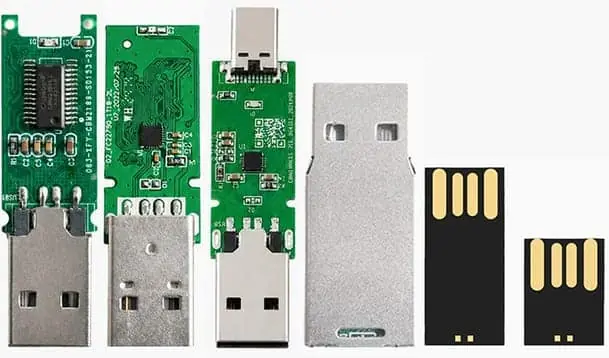
If the panel writes continuously and never needs the media removed, an eMMC or a soldered module is usually the better engineering choice: no socket to corrode, no card to be pulled, and managed wear levelling with a defined power-fail story. The UDP module route exists for exactly that case, and the semi-finished board for panels that want the flash on their own PCB.
A removable card still wins where serviceability matters — field replacement without a soldering iron, or a customer who insists on taking the log away with them.
What we supply
For panel work the relevant starting point is the monitoring-grade microSD specification, which carries the dimensions, the test method and the order notes. The broader custom memory card range covers capacities, printing and packing, and the TF card specification template is the document to fill in before asking for a price.
Two things we will not do: quote an endurance figure as a catalogue default, because it depends on the die allocated to your order; or promise a temperature range we have not tested in your enclosure.
Where to go next
- microSD power-loss corruption: what actually protects field data — the mechanism behind gate 3.
- Firmware as a storage risk: update paths that break cards — why a firmware update can invalidate an approved card.
- Flash die markings and lot codes — how gate 4 is actually checked.
- How to tell a real factory from a trading company — the audit questions that matter here.
Sources
- SD Association — SD Specifications and Capacity/Speed Class definitions
- SD Association — File system selection for SD cards
- Microsoft Learn — FAT32 maximum volume and file size limits
- Microsoft Learn — exFAT file system overview
- Linux kernel documentation — MMC/SD card support and power-fail behaviour
- JEDEC — JESD84 / eMMC and memory device standards portal
Frequently asked questions
What capacity microSD card should I standardise on for an industrial HMI?
Most panels only need 8 GB to 32 GB because they store recipes, logs and firmware images, not media. Staying at or below 32 GB keeps you in SDHC territory, which most embedded host controllers and FAT32 drivers handle without extra work. Go above 32 GB only if you have measured the log or recipe volume and confirmed the host firmware supports SDXC and exFAT.
Should I use FAT32 or exFAT?
FAT32 is the safest default for industrial panels because the widest range of embedded OS images and vendor firmware can mount it. exFAT removes the 4 GB per-file limit and the 32 GB volume limit, but it depends on the host having an exFAT driver, which is not guaranteed in older or stripped-down firmware. Test the exact firmware build before you commit a BOM to exFAT.
Do I need an industrial-grade card rather than a retail card?
For panels that write logs continuously, cycle power daily, or sit in a warm cabinet, a card built for industrial use is the safer choice. What matters is the controller's power-fail and wear handling, not the retail speed rating. Ask for the card's power-loss behaviour and endurance class in writing rather than relying on the marketing name.
Can I lock a single card model into my BOM?
Yes, but lock the full specification, not just the model name — controller family, NAND type, firmware behaviour, part number and a change-notification clause. Flash vendors revise internals without changing the retail name, and an uncontrolled swap can change power-fail behaviour in a panel that never moves.
How do I test a sample before releasing a production order?
Run a power-cycle loop, a sustained write test at your real logging rate, and a temperature soak in the cabinet you actually ship. Record failures, not just successes. A single card that survives 500 abrupt power cuts tells you more than a speed benchmark.