
What a medical wearable batch has to prove before release — lot traceability, change notification, retention at enclosure temperature, and an inspection record.
The short answer
A medical wearable does not fail release because the card was too small. It fails because nobody can prove which card went into which unit, or because the part changed underneath a validated design without anyone saying so.
Four things decide whether a batch clears:
- A lot code that resolves to a test record, retrievable six months later, not a date stamp on a carton.
- A change-notification clause in writing, before the die or controller changes — not after.
- A stated retention assumption at the enclosure temperature, because a device worn against skin runs warmer than a bench.
- An incoming inspection record you can hand to an auditor, with the sampling plan named.
Get those four and the capacity argument becomes an ordinary engineering conversation. Miss them and no capacity figure saves the batch.
What the release gate is actually checking
| Gate | What is checked | Pass criterion | What it catches |
|---|---|---|---|
| 1. Low-voltage write | Writes at the device’s minimum supply, not at nominal | No write error across the full capacity | Cards that need more headroom than the battery can give at end of charge |
| 2. Capture loss | Battery removed mid-write, repeatedly | Last complete record recoverable | A capture gap that reads like a clinical event |
| 3. Traceability | Lot code, test record and failure photos retrievable per unit or per lot | Retrievable within the agreed time | A complaint you cannot tie to a batch, which makes the whole batch suspect |
| 4. Change control | Controller and die locked, with written notice of any change | Documented and held | A silent silicon change that invalidates the device qualification |
Gate 3 is the one that separates a medical supply from a consumer one, and it costs nothing at the order stage. Ask what identifies the batch on the card, on the reel and on the test record — and whether those three can be matched six months later. A factory that prints a lot code but cannot join it to a test record has produced a label, not traceability.
Why a card counts as a component, not an accessory
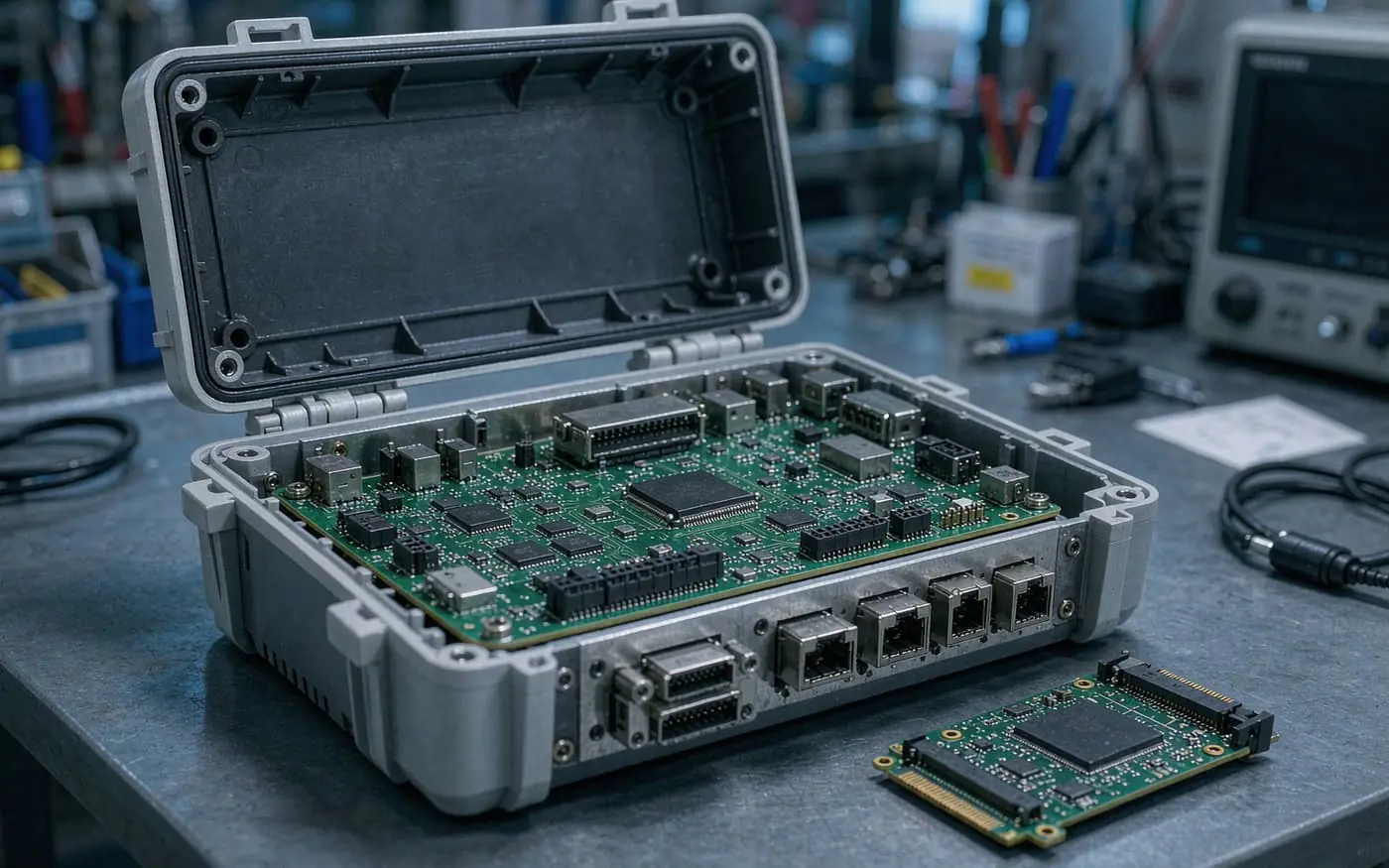
A wearable that logs a physiological signal for days is a recorder. The storage sits on the data path between the sensor and the clinician’s decision, which makes it a component under design control — even when the card costs less than the enclosure.
That has a consequence buyers underestimate: changing the card can require re-verification of the device. Not because the card is dangerous, but because the validated design named a specific part, and a different part is a different design. Suppliers who treat storage as a commodity will swap die between lots to protect their margin, and the first time you learn about it is when a batch behaves differently from the units you qualified.
The useful question is therefore not “which brand of die” but “will you tell me before it changes, and can you hold the same configuration for the life of the programme.” The first is a sourcing detail. The second is a commitment you can put in a purchase order.
The file system and the cluster size, which the drawing forgets
| Constraint | FAT32 | exFAT |
|---|---|---|
| Typical capacity band | up to 32 GB | 64 GB and above |
| Max single file | 4 GB | Practically limited by volume |
| Driver complexity on an MCU | Low, widely available | Higher, needs a real implementation |
| Host PC compatibility | Universal | Universal on modern operating systems |
| Suits | Log rotation, small records, event files | Long continuous recordings, large media |
For most wearables, FAT32 at 8–32 GB is the lower-risk choice. If the retention requirement genuinely forces you above 32 GB, budget for the exFAT driver work as part of the project rather than discovering it during validation.
Whichever you pick, specify the cluster size. A 32 GB card formatted with 32 KB clusters and the same card formatted with 4 KB clusters behave differently under a stream of small writes — the difference shows up as write amplification and, eventually, as file-system errors. Lock the cluster size in the specification and have the factory format to it.
The change notification clause, in words you can enforce
Most supply agreements say the supplier “will make reasonable efforts to notify” of changes. That sentence has never protected anyone. What works is narrower and duller:
The supplier will not change the NAND die supplier, die grade, controller, or firmware configuration for part [X] without written notice at least [N] days before the first affected shipment, and will not ship the changed part until the buyer has approved it in writing.
Three details make it enforceable. It names the four things that actually change behaviour. It puts a number on the notice period. And it makes shipment conditional on approval, so a change that arrives as a fait accompli is a breach rather than a conversation.
Ask for the same clause on the test method. A supplier who switches from full-capacity read-back to a spot check has changed the product’s assurance even when the silicon is identical.
Four ways a wearable batch fails release
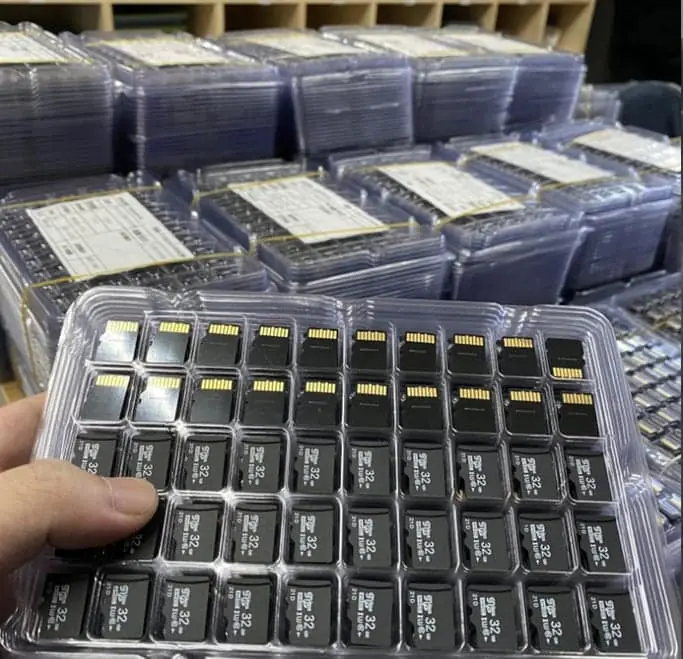
The lot code does not resolve. The carton says a week number. The test record says a different week. Nobody can tell whether the cards in unit 400 came from the lot that was tested or the one beside it.
The retention assumption was never stated. Published NAND retention figures are given at a standard temperature, and a device worn on a wrist spends hours a day above it. The card does not stop on day one. It starts losing margin, and the failure surfaces months later in a unit that has already shipped.
Power loss was treated as an edge case. A wearable is charged, docked, unplugged and dropped. If the firmware writes a log record while the battery is out, whether the last committed record survives is decided by the controller, not by the file system you chose.
The inspection record is a sentence. “Tested and passed” is not a record. A record names the lot, the sample size, the AQL, the test temperature, the date and the person. When an auditor asks what passed and the answer is a percentage with no denominator, the batch is undocumented.
What we can and cannot sign for
We can lock a die supplier and grade for a programme, issue a lot code that resolves to a test record, and hold a change until you approve it in writing. We can run full-capacity read-back at a stated temperature and put that number on the certificate.
We cannot certify a device for a regulatory submission, and we should not be asked to. What we supply is the component evidence a submission needs — the traceability, the test conditions, the change history — and your quality function decides what that evidence is worth.
One limit worth stating plainly: if the enclosure temperature has never been measured on a running unit, we are both guessing. Send the measured figure and the retention assumption becomes a calculation instead of an assumption.
Where to go next
The TF card specification page lists the fields a wearable drawing normally carries. If the design is still choosing between a socketed card and a soldered module, module, UDP or TF compares the three on the dimensions that matter here. For the acceptance side, see the bulk order acceptance checklist, and for the rest of the paperwork, what to send for a quotation.
Sources
- SD Association — SD Specifications (Part 1 Physical Layer, Part 2 File System)
- SD Association — Capacity and file system guidance (exFAT, SDHC/SDXC)
- Microsoft Learn — exFAT file system specification
- Microsoft Learn — FAT32 maximum volume and file size limits
- Linux kernel documentation — MMC/SD subsystem
- JEDEC — JESD84 / eMMC and managed NAND standards overview
Frequently asked questions
What capacity should a medical wearable card be?
Size to the retention window, not to the card. Take daily bytes written × days of retention × a headroom factor, then pick the smallest standard band that clears it. For most vitals loggers and event recorders that lands in 8–32 GB, which keeps you on FAT32 and away from exFAT driver work.
Is a high-endurance or "industrial" card required?
Only if your host writes continuously. A device that logs a few MB per day does not stress the card the way a dashcam does. What matters more is predictable power-loss behaviour and a locked controller/firmware combination, not a marketing endurance label.
Can the device format the card itself?
Yes, and it should. Ship cards pre-formatted to the exact cluster size your firmware expects, and have the device re-format on first boot or on a detected filesystem mismatch. Do not rely on the user formatting on a PC.
Do I need a card with a specific speed class?
Speed class guarantees sustained sequential write, which matters for video. For low-rate sensor logging, random-write behaviour and controller consistency matter more. Specify the class your firmware actually needs and test it; do not pay for a class you cannot use.
What should be locked in the BOM?
Controller family, NAND generation, card capacity band, file system and cluster size, formatted/unformatted state, label artwork, and the firmware version used for the production format. Anything not written down will drift between lots.
Is a high-endurance or "industrial" card required?
Only if your host writes continuously. A device that logs a few MB per day does not stress the card the way a dashcam does. What matters more is predictable power-loss behaviour and a locked controller/firmware combination, not a marketing endurance label.