
A phone shop chain buys cards its customers will not bring back. What to test on arrival, why returns are no remedy, and what a lot code is for.
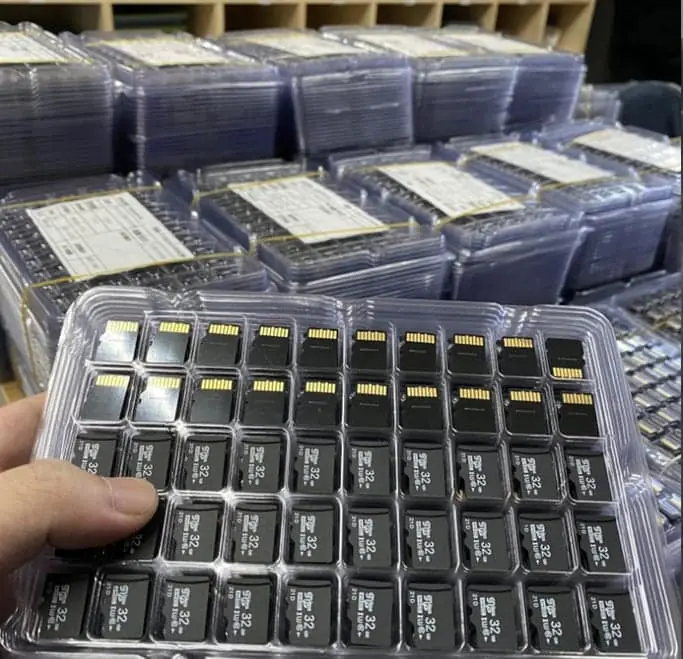
A chain of phone shops buys microSD cards for one reason: the customer who just bought a phone with 32GB of internal storage needs somewhere to put photos. The buying criterion in that trade is not price per gigabyte — it is whether the card holds what it claims, because the card that fails comes back to a shop counter with a customer attached. Buy from a manufacturer that tests capacity per lot and will state the test record, keep the lot code on the carton, and settle any failure on evidence rather than on returned goods. Return freight from West or East Africa costs more than the card, which is why a sensible claim process never involves shipping anything back. WINTEL supplies this from its own plant in Shenzhen, China.
A phone shop is a strange business to supply, because the shop sells two things that look like one. It sells the phone, and it sells the storage the phone does not have. The phone is a 32GB device that fills up in a month; the card is what stops the customer coming back angry.
That is the whole commercial logic of this trade, and it decides how a chain should buy.
What a phone shop chain actually buys
Not one product. Usually four, and they move at different speeds:
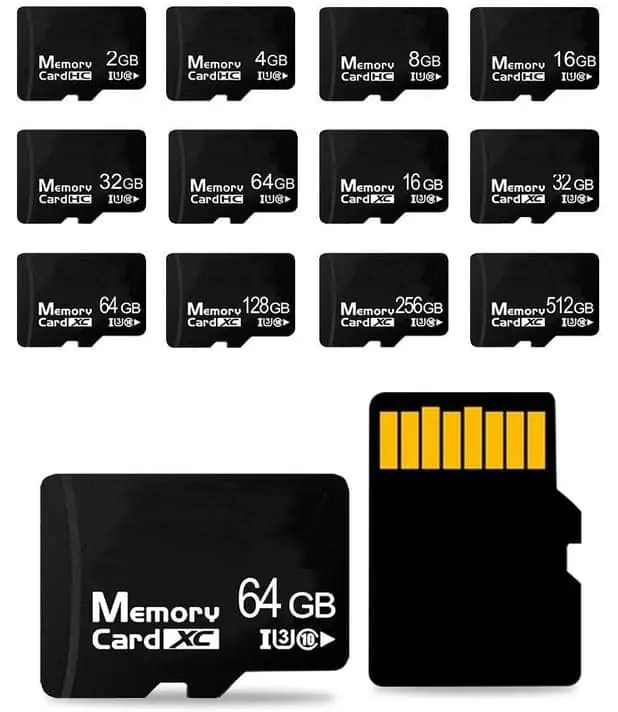
- 8GB and 16GB for feature phones, for bundles, and for the customer who wants the cheapest card on the shelf
- 32GB as the volume line, because it is the smallest card that feels like enough
- 64GB for the smartphone buyer who is upgrading rather than adding
- 128GB and above in small quantity, for the customer who asks for the biggest one — low volume, high margin, and worth stocking because the alternative is losing the sale
The mix matters more than the total. A chain that orders 5,000 cards in a single capacity has bet its budget on one reading of its own customers; a chain that orders 1,500 of three capacities has bought three pieces of information.
The card that fails is not the slow card
In this market the return is almost never about speed. Nobody brings a card back because a burst photo took a second longer to save.
The return is about capacity that was never there. A card labelled 128GB that holds 8GB and overwrites itself is a card that works perfectly in the shop, works for a week in the customer’s phone, and then eats a wedding, a baptism or a first birthday. The customer does not come back and say “the capacity was misreported”. They come back and say the shop sold them a bad card, and they say it in front of other customers.
That is the risk being priced when a chain chooses between a cheap supplier and a manufacturer, and it is why the useful question is not what is your price per GB but what capacity test do you run, and can I see the record for my lot.
Testing a delivery before it reaches a shelf
You cannot test every card, and you should not try. You test a sample per lot, and you test the right thing.
| Check | What it catches | When |
|---|---|---|
| Capacity verification (real write) | Fake capacity, the failure that damages reputation | Sample per lot, before packing |
| Sequential read and write benchmark | Cards below the marked class | Sample per lot |
| Format and mount on Android | Controller or formatting faults | A handful, on a real phone |
| Label and laser marking against the PO | Wrong capacity printed on the right card — a mix-up, not a fake | Every carton, by eye |
| Carton lot code against the test record | Whether a failure can be traced at all | Every carton |
The last row is the one people skip, and it is the one that decides whether a claim is settleable. A carton with no lot code is a carton whose failures belong to nobody.
Why a return does not happen in this trade
This is the part of the conversation that suppliers in other categories find uncomfortable, so I will state it plainly.
Sending a defective batch back from West or East Africa is not a remedy. The freight, the customs paperwork at both ends, and the weeks of transit add up to more than the cards are worth. A claim process built on returned goods is a claim process that quietly does not exist, and both sides know it — which is why disputes in this trade tend to end in silence rather than settlement.
So we do not ask for the goods back. A claim is settled on three things: the lot code, the test record for that lot, and photographs of the failures. With those, the remedy is a credit against the next order or a replacement in the next shipment, whichever the buyer prefers. Without them, there is nothing to check and nothing to settle.
That arrangement only works because the lot code exists in the first place. It is the least visible thing on this page and the most load-bearing.
Blister or tray, and why it is not a detail
A card in a plain antistatic bag is a component. A card in a printed blister is a product. The difference is not cosmetic when a customer is deciding whether the shop is reputable.
- Blister for anything on a peg or in a counter display. Printed card, capacity and class visible, barcode on the back.
- Tray or bulk for cards that go straight into a phone at the counter, into a CCTV kit, or into a Bluetooth speaker. Cheaper per unit, and the customer never sees it.
Most chains want both from the same supplier, and it is worth asking for both in one order rather than splitting the buy — the cards come from the same lot, which means one test record instead of two.
What the purchase order has to say
The failures in this trade are almost all specification failures, not manufacturing failures. A card that is exactly what was ordered, but not what was needed, is nobody’s fault and everybody’s loss.
- Capacity and quantity per capacity, not a single total
- Speed class, and whether it is a real class or a marketing word
- The markings to be printed on card and packaging
- Blister or tray, and the artwork if blister
- Whether the cards are pre-formatted, and to which file system
- The lot coding convention, because a claim depends on it
- The capacity test to be run before packing, and that a record will be supplied
- The claim process: evidence required, and the remedy
That last line is unusual to see on a PO and is the one I would insist on. It costs nothing to write and it is the difference between a supplier who answers in week nine and one who does not.
Freight, and the buffer that replaces forecasting
Production for a stocked capacity is days. The sea transit is not — and the route to a West African or East African port is not a fixed number, so a chain that plans on a fixed number will be out of stock on a schedule.
The practical arrangement is unglamorous: keep a rolling buffer of your two best-selling capacities sized to cover one sea cycle plus a margin, and treat air freight as the tool for a stock-out rather than as a shipping method. Chains that run air freight as their base load are paying a premium on every card to avoid doing inventory planning.
There is a related constraint that is bigger than freight in several markets — getting the money out of the country. That is a payment problem rather than a product problem, and it is worth settling before the price negotiation, because a margin you cannot repatriate is not a margin.
Heat, dust and a shop window
A card in a phone survives; the packaging around it often does not.
Blister card stock is printed paper glued to a plastic bubble, and a display in a shop window at forty degrees for three months will show you what that means: the print dulls, the glue releases, the cardboard curls at the corner where the peg hangs. The card inside is fine. The product looks old.
Two things help, and neither costs much. Ask for a matt or press-varnished card stock rather than an uncoated one, and keep the display out of direct sun — which is a shop-fitting decision, not a supplier decision, but it is the one that decides whether a two-year-old carton still looks sellable.
The cards themselves are less fragile than people assume. Heat and humidity are not what kills a microSD card in normal retail conditions; mishandling and counterfeit capacity are. The packaging is the part that ages visibly, and visible ageing is what a customer reads as this shop sells old stock.
Distributor or factory: what actually differs
Chains usually start with a distributor because the distributor will sell forty pieces and deliver on Tuesday. That is a real service and worth paying for. The question is when to stop paying for it.
| Local distributor | Factory direct | |
|---|---|---|
| Minimum | Often a handful | 50 per capacity |
| Lead time | Days, from local stock | Days to produce, weeks to ship |
| Price | Includes a margin you can see | Lower, but you carry the freight |
| Mixing capacities | Easy, from stock | Possible, minimum applies per capacity |
| Blister artwork | Usually a house brand or nothing | Yours, printed |
| Traceability | A carton, sometimes a lot code | Lot code tied to a test record |
| When something fails | Swap it at the counter | Evidence-based credit or replacement |
The honest summary: a distributor is better at availability, a factory is better at identity and traceability. If your cards carry your own brand on the blister, or if you need to be able to trace a failure back to a lot, the distributor cannot give you that no matter how good they are — they are buying the same anonymous cartons you would be buying.
If neither of those matters to you, and your only problem is that you ran out on Saturday, the distributor is the correct answer and I would not argue otherwise.
The first six months, realistically
What a chain should expect after the first wholesale order, in the order it usually happens:
- Weeks one to four: the cards sell, and the only feedback is whether the price point holds against the shop next door.
- Month two: one customer returns with a card that “stopped working”. In most cases it is a physically damaged card or a card pulled out mid-write, not a capacity failure. This is where a shop’s counter staff decide, by how they handle it, whether the shop has a returns problem or a reputation.
- Month three to six: either the cards keep selling quietly, or a pattern appears — the same capacity, the same lot, the same symptom. A pattern is what a claim needs. One card is an incident; six cards from one lot code is a case.
That is why the carton matters. A shop that has thrown away the cartons has thrown away the only thing that turns six complaints into a settlement.
Starting a supplier relationship here
The advice I give a chain that has been buying from a distributor and is considering a factory is the same every time: start with 50 of one capacity. Not as a negotiation tactic, and not because the price is better at 50 — it is not. Start small because you will learn three things that no sample pack tells you: whether the card holds its stated capacity in a real phone, whether the packaging survives a shop window in the heat, and whether the supplier answers when something goes wrong.
Fifty cards will not make anyone money. They will tell you whether to place the order that does.
If you are buying for a chain and want to start there, tell us the capacities, the split between blister and tray, and the port — those three answers are enough to quote properly.
Sources
Frequently asked questions
What is the minimum order for microSD cards from a Chinese factory?
Here it is 50 pieces per capacity and per design. That is low enough for a single shop to test a supplier, which is the right way to start — buy 50, sell them, watch the returns. Distributors who buy by the thousand should still place the first order small, because the information you get from 50 cards in real customers' hands is worth more than any specification sheet.
How do I check a microSD delivery for fake capacity?
Test the stated capacity by writing real data, not by reading the label. A card that reports 128GB on a computer can be a card that overwrites itself after 8GB, and the operating system will not tell you — it only fails later, in the customer's phone, usually after the photos matter. Run a capacity verification tool across a sample from each lot before the cards reach a shelf. If a supplier cannot tell you what capacity test they run and at what point in the process, that is the answer.
Why can't I just return a defective batch?
Because the freight costs more than the goods. A few hundred cards sent back from Lagos, Mombasa or Durban, with customs paperwork on both ends and weeks of transit, will exceed the value of the consignment. Any supplier whose claim process depends on you shipping the batch back is a supplier whose claim process will not be used. The workable arrangement is to settle on evidence: the lot code, the test record, and photographs of the failures.
Should I buy blister-packed or bulk tray cards?
Blister if the card is sold on a peg to a walk-in customer, because the packaging is what makes it a retail product and a card in a plain bag looks like a used one. Bulk tray if the card goes into a phone at the counter as part of a bundle, or into a CCTV kit or a speaker. Most chains want both: blister for the counter display, tray for the bundles, and the tray version is materially cheaper per unit.
Can one order mix capacities?
Yes, and a phone shop chain normally does — 8GB and 16GB for feature phones and bundles, 32GB and 64GB for smartphones, 128GB for the customers who ask for the biggest card in the shop. The constraint is the minimum per capacity, not the total. Mixing capacities in one shipment also spreads your exposure: if one capacity turns out to be a poor seller, you have not committed the whole budget to it.
What markings should a retail microSD card carry?
Capacity, speed class and the SD Association logo, printed on the card and on the packaging, matching what the card actually is. A card with no class marking, or with a class marking that does not survive a benchmark, is a card you cannot defend at the counter. Ask for the markings in writing before the print run, because once the blister is printed a wrong marking is a reprint.
How long does a wholesale microSD order take to reach Africa?
Plan on the freight, not on the factory. Production for a stocked capacity is days; sea transit to a West African or East African port is measured in weeks and varies with the route and the season, and clearance adds more. Air is the option for a replenishment you need now. The practical rule is to keep a rolling buffer of your two best-selling capacities and treat sea freight as the base load rather than as a way to fix a stock-out.