
Appearance is the defect buyers argue about most and define least. What counts as a claim, why photos fail, and how a credit against the next order works.
The short answer
Appearance claims almost never fail because the buyer is wrong. They fail because the order never said what right looked like.
| What the order usually specifies | What it usually leaves out |
|---|---|
| Capacity, interface, controller, grade | The exact colour, gloss and texture of the outside |
| Test method for read/write | Who judges appearance, under what light, at what distance |
| Packaging quantity and carton marks | Whether a scratch on the hidden underside counts |
| A sample was approved, once | Where that sample is now, and what it is compared against |
A capacity dispute is short because there is a number. An appearance dispute is long because there is a memory, and two memories rarely agree.
The defect nobody writes down
I have watched buyers spend three weeks on a quotation, negotiating cents, and then approve the appearance of a ten-thousand-piece order by looking at one sample under a hotel ceiling light. That is not carelessness. It is that appearance feels obvious — you will know it when you see it.
Except you will not, and neither will the person inspecting the batch, because by then the sample is in a different country and the light is different.
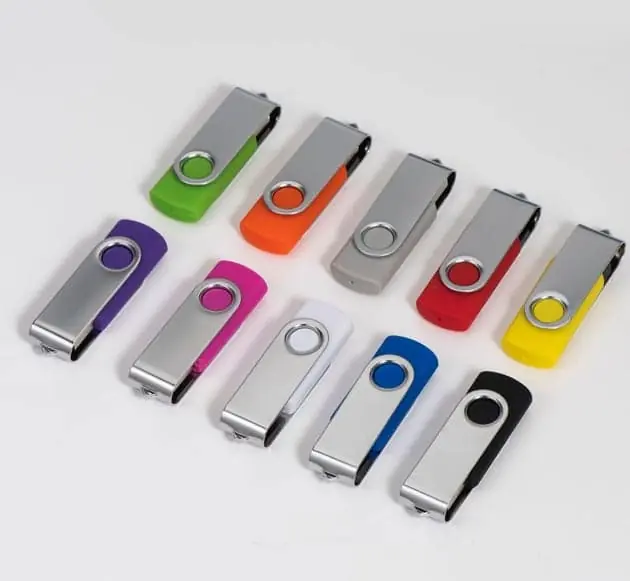
Capacity is a claim about an internal fact that a tool can measure. Appearance is a claim about an external fact that a human compares. On a swivel body the joint gap is exactly that kind of fact — the 67.5 mm swivel page lists what the sample check is supposed to cover. The first needs a threshold; the second needs a limit sample — a physical unit, signed by both sides, that defines the edge of acceptable. Not a perfect unit. The worst acceptable one. That distinction is the whole discipline, and it is the part almost every order skips.
What actually changes between two batches
None of the following is a defect in itself. Every one of them has produced a claim.
| What shifts | Why it shifts | Where you see it |
|---|---|---|
| Anodising dye lot | The dye is mixed per batch; even the same specification lands slightly deeper or lighter | Colour on metal bodies, most visible between two halves of one order |
| Screen print ink batch | Ink is mixed to a target, and a second mix is a second mix | Solid colour logos, especially large areas of one colour |
| Laser focus depth | Focus drifts as a lens heats or a fixture wears | Engraved marks that read deeper on early units than late ones |
| PVC overmould flow | Material flows around the insert differently as a tool warms | Faint flow lines near the seam, visible at a low angle |
| Brushed metal direction | The brush passes in one direction per sheet; a re-set changes it | A sheen that flips differently when you turn the drive |
| Transit scuffing | Cartons rub against each other for two weeks | Edge wear that is real, and is nobody’s production defect |
The last one matters more than buyers expect, because it is where a legitimate claim and an illegitimate one get mixed together in the same carton. A batch can arrive with three cosmetic issues, and only two of them were ours.
Why your phone camera is the worst evidence in this argument
This is the part that makes these claims expensive, so I will be blunt about it.
A photograph is not a measurement. The camera decides the white balance, so a warm ceiling makes a cool grey read as beige. The angle decides how much of the gloss reaches the sensor, so a matte finish photographed straight on can look satin. The distance decides whether a mark is a mark or a texture. Send me the same drive photographed by three people and I will send you three colours, and each photographer will be honestly certain that theirs is the true one.
So when a buyer sends a photo and says “this is not what we approved”, they are usually right that something is different, and the photo is almost never able to prove it. Both sides then spend a fortnight trading images taken under conditions that cannot be compared.
There is a cheap fix, and it costs one sample: photograph the approved unit next to the disputed unit, in the same frame, under the same light. If the difference is real it survives that comparison. If it disappears, you have just saved yourself an argument — and possibly a customer relationship.
How to write an appearance criterion that survives
Four things, and none of them is technical:
- Three signed limit samples. One for you, one for us, one sealed into the production file against the part number. Sign and date them. A sample without a date is a sample without a version.
- A named light source and a named distance. “Under D65 at 45 cm” is a criterion. “In normal light” is a wish. If you do not have a light booth, agree on daylight at a window and say so in writing.
- A statement of which surfaces matter. The face that carries the logo and the face that touches the table are not judged the same way, and saying so prevents half of these claims before they exist.
- A separate acceptance line for appearance. Capacity and read/write get one sample size and acceptance number; appearance gets another. Use the sampling plan you have actually agreed rather than an impression formed while opening a carton.
That is the entire specification. It fits in six lines of an email, and it is the difference between a batch that can be judged and a batch that can only be discussed.
A ten-thousand-piece order that came back on appearance
Here is a real one, with the identifying details removed, because the mechanism is more useful than the account.
An overseas buyer received a batch of ten thousand plus units and the appearance was not what had been approved. Not broken, not unusable — visibly off, in a way that would have been obvious to their own customer. This is the worst category to be in, because nobody can point at a test result.
We did not ask for the goods back. At that distance the return freight alone would have been a serious fraction of the order, the return leg needs customs entry in both directions, and the weeks in transit would have been spent with the buyer’s customer waiting. So the units stayed where they were. The buyer sent the lot code, the batch record and photographs of the specific failures; we credited the value against their next order, and the replacement run went through with the finish pinned to a signed sample rather than to a conversation.
I am not going to present that as a policy win. It cost us the margin on the batch. What it bought was a claim settled in days instead of a dispute settled over months, and a customer who reordered.
Why credit against the next order, and when it is the wrong answer
The reason suppliers reach for this settlement is not generosity. It avoids two-way freight and it avoids moving money across a border twice. For a buyer who will order again, it is fast and it is clean.
But be clear about what it is. A credit against the next order is only worth its face value if there is a next order. If your programme is finishing, or you are testing a new supplier, or the batch was for one event, then a credit is a discount you will never collect. In that case you want a payment or a partial refund, and you need to have agreed which of the three applies before the batch ships — not discovered it during a problem.
Our default is rework, replacement or credit, with a refund agreed case by case depending on what the buyer actually needs. A buyer who tells us at quotation stage “if this fails I need money back, not a credit” gets a different arrangement from the start, and that is a much easier conversation to have in week one than in week nine.
Two things we will not settle as a production defect: damage that happened in transit, which belongs to the carrier and to the packaging specification, and a difference the order never defined. The second one is difficult to say and I say it anyway — if nobody wrote the tolerance, then nobody was out of tolerance.
What this means for your next order
If you take one thing from this page, take the limit sample. It is one physical unit, it costs nothing, and it converts an argument into a comparison.
Then write the settlement route down before production: what evidence counts, who decides, and whether the goods travel. Buyers spend a great deal of effort on price and very little on the two paragraphs that determine what happens when the price buys something wrong.
Two pages worth reading alongside this one: if the appearance problem is colour rather than damage, how to get a Pantone colour right on a plastic shell covers the approval route in detail; and if it is a metal logo that has come out wrong, which marking method actually produces gold on black metal explains why the methods do not produce the same result. For the wider question of what a batch is judged against, how to prepare a product acceptance agreement puts the criterion, the sampling and the remedy in one place.
If you are looking at a batch right now and something looks wrong, send us the lot code and a photograph of the disputed unit next to the approved one and we will tell you honestly whether it is ours to answer for.
Sources
Frequently asked questions
What counts as an appearance defect on a flash order?
Anything that visibly departs from the approved sample: colour outside the agreed tolerance, print that is misregistered, engraved depth that varies across the batch, a surface with scratches, flow lines or a polish that differs from the approved finish. What does not count is a difference the order never addressed — a second dye lot that is slightly deeper than the first, when no tolerance was written down. That is not a defect, it is an unmanaged expectation, and it is the single most common source of these disputes.
Are photographs acceptable evidence of an appearance defect?
As supporting evidence, yes. As the standard, no. A phone camera applies its own white balance, the angle decides how much gloss the sensor sees, and the distance changes how a mark reads. Two people photographing the same drive under two ceilings will produce two different colours and both will believe their own picture. Photographs are useful for showing that something exists — a scratch, a misregistered print. They cannot settle whether a whole batch is outside tolerance. That requires a physical sample and a named light source.
Should appearance be judged at the same AQL as function?
No, and conflating them is a mistake in both directions. Function is binary and testable, so a tight acceptance number is cheap to enforce. Appearance is graded and partly subjective, so an over-tight appearance AQL produces rejections nobody can defend, while a loose one lets a visibly wrong batch through. Write two lines in the acceptance agreement: one for capacity and read/write, one for appearance, each with its own sample size and acceptance number.
Do I have to ship a bad batch back to claim?
On an overseas order, normally not. Return freight on a pallet frequently costs more than the goods on it, the return leg needs customs entry in both directions, and the transit time is yours while your customer waits. The workable arrangement is that the goods stay where they are and the claim is settled on evidence: the lot code, the batch test record, and photographs of the specific failures. Put that in the acceptance agreement before production rather than raising it after a problem.
What does 'credit against the next order' actually mean?
It means the value of the failed units is deducted from your next purchase rather than paid back to you. It settles quickly and avoids two-way freight, but be clear-eyed about it: a credit is only worth its face value if you place another order. If you are not going to reorder, ask for a payment or a partial refund at the quotation stage, and agree which one applies before the batch ships. A supplier who offers a credit as the only option is offering you a discount you may never collect.
How do I avoid this on a repeat order?
Keep the approved sample and the appearance criterion attached to the part number, not to the email thread. On a repeat order the risk is not that the factory stops caring, it is that a second ink batch, a second anodising dye lot or a re-focused laser produces a batch that is internally consistent and slightly different from the first. If the sample and the tolerance are on file with the part number, that difference gets caught at first article. If they are in someone's drawer, it gets caught by your customer.