
microSD Cards for Repair Shops
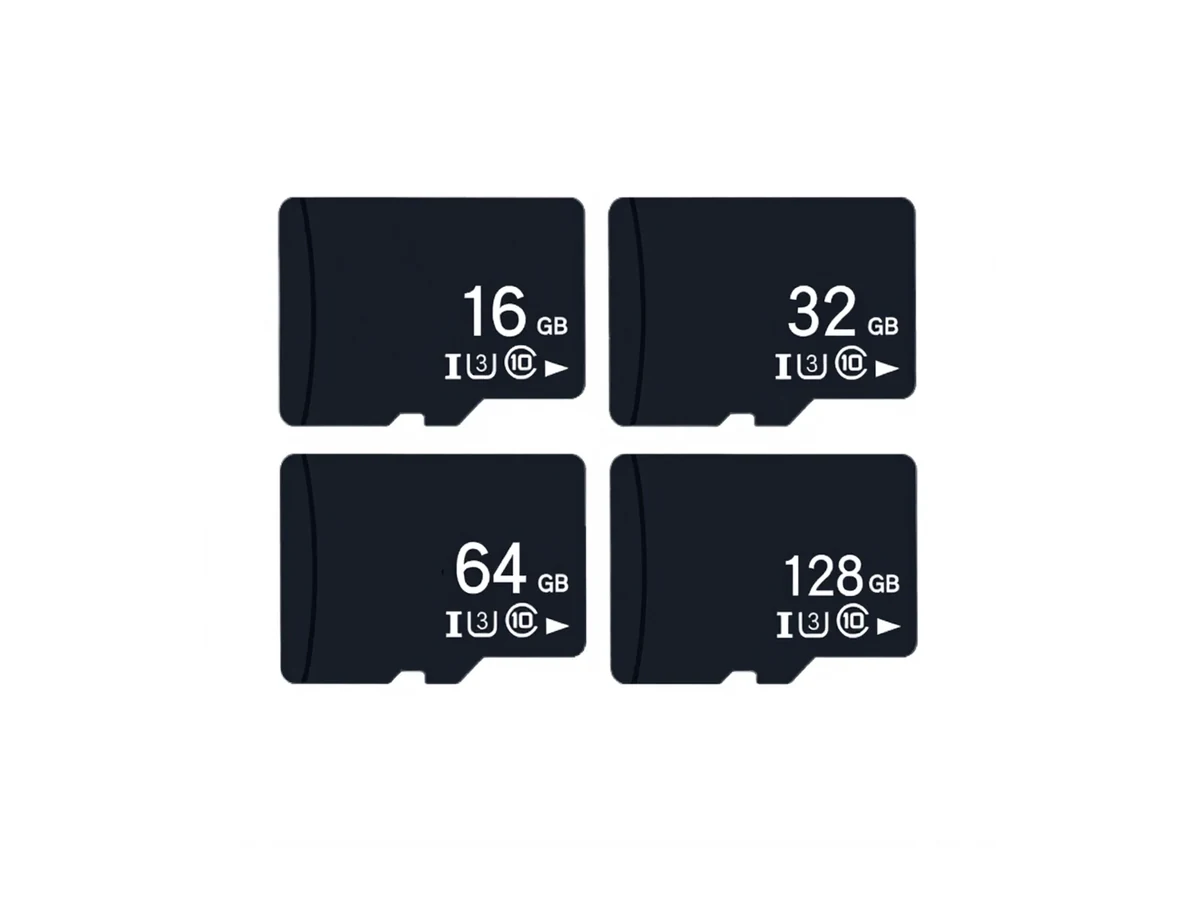
A repair shop buys microSD on a different calculation from anyone else: the card price is not the cost, the return is. A customer who comes back with a card that died in three months costs the card, the labour to prove it and the reputation in a shop where everyone knows each other. So the useful specification is not the cheapest price per gigabyte — it is a stated flash grade, a mixed-capacity order that matches the devices actually being repaired, and a lot that behaves the same way across the batch. WINTEL supplies microSD and TF cards from 4GB to 256GB in mixed orders from 50 pieces, graded in writing.
Buying to resell rather than to repair? Wholesale microSD cards covers the grade trade in general, and flash for photographers covers the buyer who needs sustained write rather than shelf stock.
Key facts
- Typical order50 – 2,000 pieces, mixed capacities in one order
- Capacity mix8GB / 16GB / 32GB dominate; 64GB – 128GB for newer handsets
- GradeStated in writing — this is the whole argument
- Minimum50 pieces, per capacity
- VerificationCapacity write-and-read-back before packing
- PackagingNeutral bulk, or retail-ready for counter sale
- Lead timeQuoted against the capacity split, not a generic figure
What a repair shop actually orders
The counter-sale card
Sold with a screen repair or as an add-on. The shop needs it to look credible in the hand and to survive being dropped in a bag, which is a packaging and body question more than a speed question.
The storage upgrade
A customer with a full phone wants more room, now. Capacity is the entire conversation, speed class is not — a 32GB card in a phone from 2019 does not benefit from U3.
The mixed restock
The realistic order. Twelve of one size, thirty of another, five of a size nobody predicted. A supplier who only quotes one capacity per line item turns this into three orders.
The warranty replacement pool
The one nobody plans for. Shops that honour a replacement guarantee need spares on the shelf, and those spares should be the same lot as the sold units or the replacement behaves differently from the original.
The card price is not the cost
A repair shop is the only buyer in this trade who sees the failure face to face. A distributor hears about it in an email; an installer finds it on a site visit; a shop has a person standing at the counter holding a phone and a card. That changes the arithmetic completely.
| What a returned card costs the shop | Roughly |
|---|---|
| The card itself | The unit price — the smallest part of the total |
| Diagnosis time | Counter time proving the card is at fault rather than the device |
| Replacement stock | A second card out of a pool the shop did not plan to keep |
| The conversation | A customer who now doubts the screen repair as well |
| The review | Local reputation is the shop’s entire acquisition channel |
Four of those five lines are larger than the first, and none of them appear on a quotation. Which is why the cheapest card is rarely the cheapest purchase for a shop, and why the grade question below is the only one worth arguing about.
Which grade is inside, and will you write it down
This is the part of the page that matters, so I will be direct about it. In the wholesale flash trade, the same printed capacity is sold at several different grades, and the cheapest grade is not a scam — it is a real product with a shorter life, sold without anyone saying so.
For a shop, the grade question is not academic. A downgraded or recycled die that passes a capacity test on the day of sale will pass the customer’s phone on the day of sale too. It fails later, quietly, after the shop has banked the money and the customer has moved city. The failure arrives as a complaint about the shop, not about a factory nobody has heard of.
So when a supplier quotes you a price that is materially below everyone else’s, the question is not "is this fake" — it is **which grade is this, and will you put it on the quotation**. A supplier who will write the grade down is telling you they know what they are selling. A supplier who answers with "high quality" is telling you the same thing, less usefully.
Where repair-shop orders go wrong
- Ordering a single capacity to keep the price down. The shop then either turns away repairs it could have sold a card for, or buys a second small order and pays the freight twice.
- Buying on price per gigabyte without asking for the grade. It is the only number that predicts whether the card comes back, and it is the one number the quotation usually omits.
- Treating packaging as an afterthought. A card sold at a counter with no retail packaging reads as a part, not a product, and it gets priced as a part.
- Assuming a capacity test on arrival is enough. It proves the card holds its size today. It does not tell you how the batch behaves in four months, which is the only thing the shop actually cares about.
- Skipping the lot code. When one card in thirty comes back, the lot code is what turns "this batch is bad" into a claim the supplier can act on.
What the order has to state
- The capacity split, as separate line items — 16GB × 40, 32GB × 60, 64GB × 20.
- The flash grade, written on the quotation and repeated on the invoice.
- The verification method: full write-and-read-back, not a file copy.
- Packaging: bulk, or retail-ready, and whether the retail version carries your shop’s name.
- The replacement route if a card fails inside the agreed period, and who pays the freight.
- The lot code, printed on the carton and repeated on the invoice.
Send the capacity split
How many of each size, whether you want bulk or retail packaging, and whether the card should carry your shop’s name. We reply to business enquiries within 1 business day.
Or email cathy@go-wintel.com — answered by Cathy, sales engineer.
Frequently asked questions
What is the minimum order for a repair shop buying microSD wholesale?
Fifty pieces per capacity at WINTEL, and a mixed order is normal rather than exceptional. The practical minimum is set by the freight and the packaging more than by production: fifty cards in bulk ship cheaply, fifty cards in individual retail packs have a per-unit packaging cost that only makes sense at a higher quantity. Ask for both prices on the same split.
How do I know the cards are not the cheap grade that fails in three months?
Ask for the grade in writing on the quotation, and ask what the difference in price would be for one grade higher. A supplier who can answer both questions knows their stock; a supplier who cannot is reselling whatever arrived. Then verify on arrival with a full write-and-read-back test rather than a file copy, and keep one card from the batch as a reference unit.
Which capacities should a repair shop actually stock?
For phones, 32GB and 64GB still cover most of the devices being repaired, with 128GB and 256GB for newer handsets and 8GB or 16GB for older stock and for cameras. The mix follows the local device park, not the global average — a shop in a market where phones are kept for six years has a very different split from one selling new flagships.
Do I need a high speed class for counter sales?
Usually not. Class 10 or U1 is enough for phone storage and for most customers, and paying for U3 on a 32GB card sold to someone who wants room for photos is money that does not reach the customer. Speed class earns its price when the card is going into a camera, a drone or a dashcam — which is a different buyer with a different question.
Can the cards carry my shop’s brand?
Yes. Printing the shop name on the card or the retail pack is a normal small order, and it is the cheapest way to make a generic card look like a product rather than a part. The minimum is per design rather than per capacity, so a mixed-capacity order can carry one brand.
What happens when a card fails and the customer has already left?
That is the case the grade question exists to prevent, and the lot code is what you use when it happens anyway. Keep the carton lot code and a note of which capacities went into which batch of sales. A claim supported by a lot code and a failing card is a short conversation; a claim supported by "some of the cards are bad" is a negotiation.