Pantone colour matching on custom USB drive bodies — when it works, when it does not, and why the same number looks different on plastic vs metal vs print.
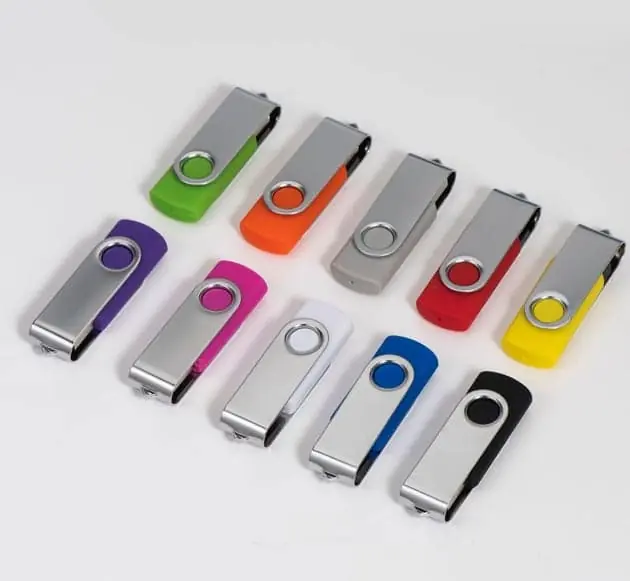
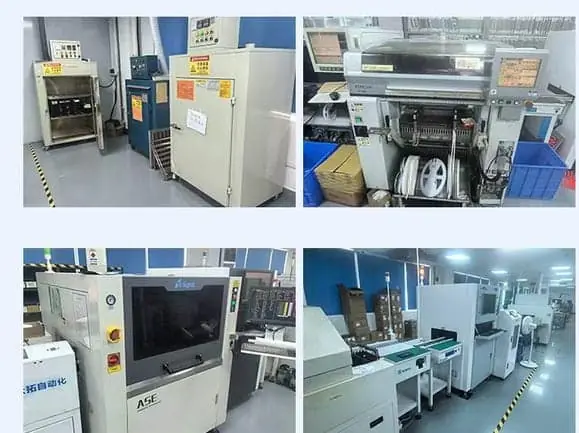
We can match Pantone colours on most USB drive bodies, but how close the match is depends on the material. Plastic injection moulding can match a Pantone within 90–95% on standard bodies, but only at quantities of 1,000 pieces or more (a custom colour requires a dedicated batch). Screen and UV printing on the surface can hit a Pantone within 95% accuracy even on small orders. Metal bodies are harder to colour-match because anodising and painting have their own colour range. We always recommend a physical colour sample before mass production. WINTEL supplies this from its own plant in Shenzhen, China.
The short answer: yes, we can match Pantone — but how close depends on what material and what quantity.
Last month a buyer sent me a Pantone swatch and expected the drive to match it exactly on a metal body. It did not — and that is normal. Plastic and metal take colour completely differently, and a Pantone is a starting point, not a guarantee.
Pantone matching sounds like a luxury until a buyer gets 500 drives in the “wrong blue” and the whole promotion looks off-brand. Colour is a process, not a switch.
People send us a Pantone number and expect the drive to look exactly like the swatch book. It never does, and it is not because we are bad at matching. It is because the same colour number looks different on every material.
Here is how colour matching actually works on a custom USB drive, what you can reasonably expect, and where people usually go wrong.
How accurate can it be, by material
| Material / method | Typical match accuracy | Minimum quantity | Setup fee |
|---|---|---|---|
| Injection-moulded plastic | 90–95% | 1,000 pcs | 50–200 USD |
| UV print on surface | 95–98% | 50 pcs | Included in print setup |
| Screen print ink | 95–98% | 50 pcs | Included in print setup |
| Anodised aluminium | 80–90% | 500 pcs | 100–300 USD |
| Spray-painted metal | 85–92% | 300 pcs | 80–150 USD |
Printing on the surface is the most accurate and the cheapest. It is also the least durable — a printed colour can scratch, whereas a moulded colour is the plastic itself.
Injection-moulded colour is the most durable and the most expensive to set up. If you are doing 5,000 pieces of one colour, it is worth it. At 500 pieces it almost never is.
Why the same number looks different every time
Take Pantone 286 C — a classic royal blue. It will look different on:
- Paper (coated) — this is what the swatch book shows
- White plastic — slightly lighter, slightly more saturated
- Black plastic — darker, more muted
- Brushed metal — greyer, less vivid
- Glossy print — brighter, closer to the swatch
This is not a mistake. It is how colour works. The same light wavelength appears different depending on what it bounces off.
Rule of thumb: if the colour needs to be “exactly” the same as something else, ask what material that something else is. If it is paper, the drive will never match exactly. If it is another plastic part, we can get close.
The colour matching process
For custom body colour orders, the process works like this:
- You send the Pantone number and the body style you want.
- We quote the colour setup fee and the per-unit price.
- We make a colour chip — a small sample of the plastic in the target colour.
- You approve or adjust — we can go lighter, darker, more blue, less green etc.
- Once approved, we run the full batch.
Plan for 1–2 rounds of adjustment. Almost no one gets it perfect on the first try.
What about standard colours?
Most catalogue bodies come in 6–12 standard colours — black, white, silver, red, blue, green, yellow, pink, etc. These are pre-coloured materials that we stock.
Standard colours:
- No setup fee
- No minimum beyond 50 pieces
- Colour is consistent batch to batch
- But the choice is limited to what we stock
If one of the standard colours is close enough, use it. You will save money, save time, and the colour will be more consistent than a custom match.
Printing is the hack most people miss
If you want a specific colour but only need 100 pieces, you do not have to custom-colour the whole body.
You can:
- UV print the whole visible surface — gives you any colour, any design, and it is accurate
- Use a white body and print the colour on — cheaper than custom plastic
- Print a large coloured area that covers most of the visible surface
It is not the same as a coloured body up close, but from arm’s length it looks identical, and it costs much less at low quantities.
When custom colour is worth it, and when it is not
Worth it if:
- You are ordering 1,000+ pieces
- The body colour is part of your brand identity
- The drive is a premium gift, not a throwaway
- You need consistency across multiple orders
Not worth it if:
- Your order is under 500 pieces (use a standard colour or print it)
- You need “exact” match to a paper swatch (it will never be exact)
- The colour is close enough in one of the standard options
- This is a one-off order
The most common mistake: ordering 200 pieces and insisting on a custom Pantone body colour. The setup fee makes the unit price 30% higher, and the colour is only 90% accurate anyway. Printing the colour on a standard body looks better and costs less.
Still wondering if custom colour is the right move? Send me the Pantone number and the quantity and I will tell you which method will give you the best result for your budget. No sales pitch, just straight advice.
I will show you the printed chip on your actual body before production, because a Pantone on screen and a Pantone on plastic are never the same animal. If a supplier matches “by eye” without a proof, that is your risk, not theirs.
What actually decides the final colour
| Factor | Effect on the match | What I do about it |
|---|---|---|
| Body material (plastic vs metal) | Metal darkens and cools the colour | Proof on the real body, not a chip sample |
| Print method (screen vs UV) | UV holds tone better on curved surfaces | Match method to the artwork |
| Surface finish (matte vs gloss) | Gloss shifts the hue lighter | Note finish in the proof |
| Transparency of the ink | Solid colours are predictable; fades are not | Avoid gradient-to-colour matches |
| Lighting you view under | Same chip looks different under warm vs cool light | Judge under your end-use light |
Send me the Pantone and the body, and I will mail you a printed proof before we run the order. That ten-minute step is the difference between “close enough” and “on brand”.
Frequently asked questions
Is there a minimum quantity for a custom Pantone body colour?
Yes — custom plastic body colour usually starts at 1,000 pieces, because we need to run a full batch of injection-moulded shells in that colour. Printing colour has no minimum beyond the standard 50-piece order.
Can you match any Pantone colour?
Most colours, but not all. Very bright neon colours, some fluorescents, and certain deep metallics are difficult or impossible to match in plastic injection moulding. Print ink has a wider range.
Will the colour look exactly like my Pantone swatch?
Close, but never exact. The same Pantone number looks different on paper, on plastic, on metal, and on screen. A 90–95% match is considered good for plastic parts.
Is there a tooling or setup fee for custom colour?
Yes — there is usually a colour matching fee of 50–200 USD for developing the masterbatch. This is separate from the tooling fee for a new shape.
How long does colour matching add to the lead time?
Count on an extra 5–7 days for a colour sample approval step. You approve the colour chip before we run the full production.